A Return to Gentle Storytelling
In an era where mainstream cinema often leans toward high-stakes drama, loud emotions, and elaborate action set pieces, Hridayapoorvam arrives like a breath of fresh air. It does not rely on shock value, spectacle, or larger-than-life heroism. Instead, it offers something far more rare today: a simple story told with honesty, warmth, and emotional depth. At the center of this understated drama stands Mohanlal, whose naturalistic performance grounds the film and elevates it beyond its modest setting.
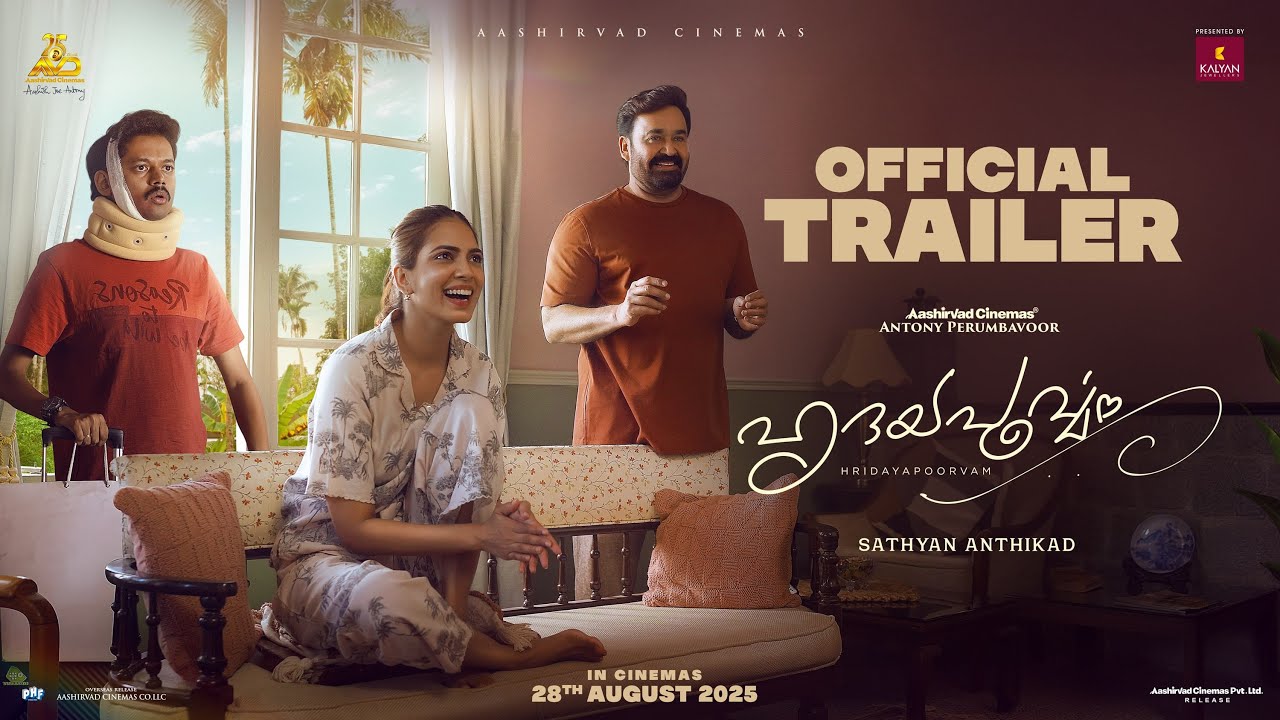
Hridayapoorvam reminds viewers that cinema does not always need noise to make an impact. Sometimes, a quiet film with a beating emotional core can stay with the audience longer than a loud, explosive entertainer. That is where the film finds its strength.
Mohanlal’s Mastery of Subtlety
Mohanlal has long been recognized as one of India’s finest actors, admired for his ability to disappear into any character. In Hridayapoorvam, he once again demonstrates why subtle acting can often be more powerful than dramatic outbursts.
He plays a gentle, emotionally layered man navigating everyday struggles—family tensions, responsibilities, unspoken regrets, and moments of personal reflection. His performance is unforced, organic, and deeply human. He does not need heavy dialogue to express what his character feels. A glance, a sigh, a small smile, or a moment of silence is enough.
What stands out is how Mohanlal allows the audience to feel the character’s inner world without ever overselling it. It is the kind of acting that looks effortless but requires immense control and emotional intelligence.
jwmcollection.com | lasandino.com | juststartblog.com
amherstdelivery.com | thewhipp.com
A Story Rooted in Real Emotions
The film’s narrative is built around family relationships—love, misunderstandings, generational gaps, and reconciliation. Instead of dramatic twists, the story relies on emotional truths that most people can relate to.
There are scenes of everyday life: meals shared, disagreements softened, memories revisited, and moments of vulnerability acknowledged. These ordinary but meaningful situations give the film its charm. Audiences find themselves quietly moved because the film mirrors real life in a genuine way.
The story’s simplicity is its asset. It does not pretend to be something grand; it focuses on a single family and their emotional journey, making it universal.
Supporting Cast That Complements the Film
While Mohanlal is undoubtedly the anchor of the film, the supporting cast adds authenticity and warmth. Each actor delivers performances that complement the film’s tone—gentle, sincere, and grounded.
The characters around Mohanlal are not exaggerated; they feel like real people with complex emotions. Their presence helps shape the protagonist’s world, making his journey feel complete and believable.
Direction That Respects Silence
The film’s director deserves credit for embracing a style rarely seen today: the courage to keep things simple. Instead of fast cuts and loud background score, the film uses quiet moments, ambient sounds, and natural conversations.
This controlled approach reflects a confidence in storytelling. The director does not rush scenes or force emotions. Instead, the film flows at a pace that allows viewers to absorb every moment, just like one would feel in real life.
This gentle direction style ensures that Mohanlal’s performance shines even brighter. The camera lingers on faces, pauses on small interactions, and lets emotions breathe.
Cinematography That Enhances the Mood
The visuals play an important role in establishing the film’s atmosphere. Sunlit rooms, soft shadows, and warm color tones create a sense of comfort and nostalgia. The cinematography avoids flashy angles and instead focuses on simple, elegant shots that reflect the film’s emotional rhythm.
There is a softness in the way each frame is captured. It makes the film feel intimate, almost as if the audience is sharing private moments with the characters.
Music That Supports, Not Overpowers
The background score, much like the film, is subtle. The music knows when to speak and when to stay quiet. It gently heightens emotional scenes without dictating how the audience should feel.
A few soulful tracks capture the essence of family bonds, love, and introspection, but they never overshadow the narrative. The restraint shown in the music selection reflects the film’s overall philosophy of understated impact.
A Film About Feelings, Not Formula
Hridayapoorvam stands apart because it refuses to follow the formula of modern commercial cinema. It focuses on real human emotions instead of sensational drama. The film’s impact lies not in its plot twists but in the honesty of its storytelling.
Viewers will find themselves thinking about their own family relationships, their own unspoken feelings, and the small yet meaningful moments that make life what it is. The film succeeds by making the personal universal.
Why This Film Matters Today
In a cinematic environment dominated by spectacle, Hridayapoorvam offers something refreshing: emotional authenticity. It reminds audiences that stories about ordinary people can be just as powerful as stories about heroes and villains.
Moreover, it highlights why Mohanlal remains one of India’s greatest actors. His performance in this film is a masterclass in restraint, nuance, and emotional depth. It showcases his ability to transform the simplest scenes into deeply moving moments.
Conclusion: The danger of whispering truths
The Delhi University recruitment scandal – if real – can in no way be proved by additional records or audio recordings. But the chorus of quiet accusations tells its own story: A system where profits are now and again hidden with the help of money influence, fraud and rumors.
This crisis is no longer manufactured on paper, but in murmurs – and public murmurs – indicating a profound rot of thought at one of India’s most prestigious educational institutions.
For a meaningful alternative, the silence must be broken – not by using angry accusations, but by strengthening transparency, equality and accountability within recruitment patterns. Only then can DU regain its recognition as a field where talent, no longer behavior, shapes the future of education.
jwmcollection.com jwmcollection.com jwmcollection.com jwmcollection.com jwmcollection.com jwmcollection.com jwmcollection.com jwmcollection.com jwmcollection.com jwmcollection.com jwmcollection.com jwmcollection.com jwmcollection.com jwmcollection.com jwmcollection.com jwmcollection.com jwmcollection.com jwmcollection.com jwmcollection.com jwmcollection.com jwmcollection.com jwmcollection.com jwmcollection.com jwmcollection.com jwmcollection.com jwmcollection.com jwmcollection.com jwmcollection.com jwmcollection.com jwmcollection.com jwmcollection.com jwmcollection.com jwmcollection.com jwmcollection.com jwmcollection.com jwmcollection.com jwmcollection.com jwmcollection.com jwmcollection.com jwmcollection.com jwmcollection.com jwmcollection.com jwmcollection.com jwmcollection.com jwmcollection.com jwmcollection.com jwmcollection.com jwmcollection.com jwmcollection.com jwmcollection.com jwmcollection.com jwmcollection.com jwmcollection.com jwmcollection.com jwmcollection.com jwmcollection.com jwmcollection.com jwmcollection.com jwmcollection.com jwmcollection.com jwmcollection.com jwmcollection.com jwmcollection.com jwmcollection.com jwmcollection.com jwmcollection.com jwmcollection.com jwmcollection.com jwmcollection.com jwmcollection.com jwmcollection.com jwmcollection.com jwmcollection.com jwmcollection.com jwmcollection.com jwmcollection.com jwmcollection.com jwmcollection.com jwmcollection.com jwmcollection.com jwmcollection.com jwmcollection.com jwmcollection.com jwmcollection.com jwmcollection.com jwmcollection.com jwmcollection.com jwmcollection.com jwmcollection.com jwmcollection.com jwmcollection.com jwmcollection.com jwmcollection.com jwmcollection.com jwmcollection.com jwmcollection.com jwmcollection.com jwmcollection.com jwmcollection.com jwmcollection.com jwmcollection.com jwmcollection.com jwmcollection.com jwmcollection.com jwmcollection.com jwmcollection.com jwmcollection.com jwmcollection.com jwmcollection.com jwmcollection.com jwmcollection.com jwmcollection.com jwmcollection.com jwmcollection.com jwmcollection.com jwmcollection.com jwmcollection.com jwmcollection.com jwmcollection.com jwmcollection.com jwmcollection.com jwmcollection.com jwmcollection.com jwmcollection.com jwmcollection.com jwmcollection.com jwmcollection.com jwmcollection.com jwmcollection.com jwmcollection.com jwmcollection.com jwmcollection.com jwmcollection.com jwmcollection.com jwmcollection.com jwmcollection.com jwmcollection.com jwmcollection.com jwmcollection.com jwmcollection.com jwmcollection.com jwmcollection.com jwmcollection.com jwmcollection.com jwmcollection.com jwmcollection.com jwmcollection.com jwmcollection.com jwmcollection.com jwmcollection.com jwmcollection.com jwmcollection.com jwmcollection.com jwmcollection.com jwmcollection.com jwmcollection.com jwmcollection.com jwmcollection.com jwmcollection.com jwmcollection.com jwmcollection.com jwmcollection.com jwmcollection.com jwmcollection.com jwmcollection.com jwmcollection.com jwmcollection.com