The much-talked-about film ‘Haq’, starring Emraan Hashmi and Yami Gautam, has finally been cleared for release after the court dismissed a petition filed by Shah Bano’s daughter. The petitioner had sought to block the film’s release, alleging that it was inspired by the Shah Bano case and could potentially distort facts or hurt sentiments. However, the court ruled that the petition was delayed, lacked merit, and failed to establish any valid reason to stop the film’s release.
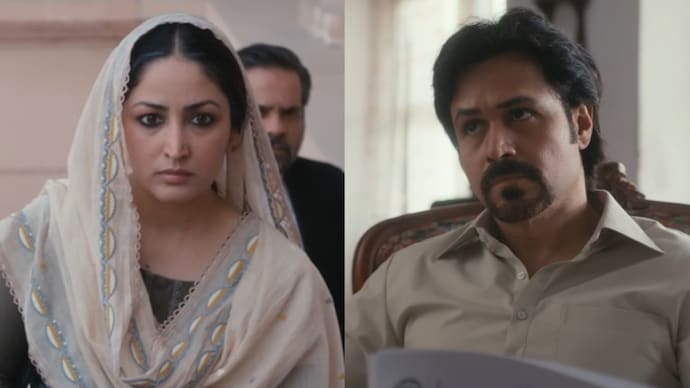
The verdict brings relief to the film’s makers and fans, marking the end of weeks of legal uncertainty surrounding one of the most anticipated films of the year.
1. What Was the Case About?
The controversy began when Shah Bano’s daughter filed a petition requesting the court to stay the release of the movie ‘Haq’. She claimed that the film’s storyline bore close resemblance to the real-life struggles of her late mother, Shah Bano, whose historic legal battle in the 1980s reshaped India’s debate on women’s rights and Islamic law.
The petitioner argued that the film’s portrayal could misrepresent her mother’s legacy, and that the producers should have taken consent or clarified that the story was purely fictional.
However, the film’s makers repeatedly stated that ‘Haq’ was a work of fiction inspired by broader social themes and not a retelling of any specific real-life incident.
2. The Court’s Decision
The court carefully reviewed the petition, arguments, and materials submitted by both sides before making its decision. Ultimately, the court dismissed the plea, stating that it had been filed too late — just days before the film’s release — and that it failed to demonstrate any direct violation of rights or misrepresentation of facts.
The court emphasized the importance of freedom of expression and creativity, noting that artistic works cannot be censored or stopped merely based on speculation or assumptions.
In its order, the court said:
“The film is a creative expression protected under Article 19(1)(a) of the Constitution. The petitioner has failed to provide concrete evidence that the movie directly defames or misrepresents her mother’s life. The timing of this petition suggests an attempt to delay the film’s release rather than a genuine grievance.”
Artilleriess.com | Therapyeutic.com | VirtualsWeb.com
WebesWhiz.com | ByteBeates.com
3. Relief for the Makers of ‘Haq’
The ruling comes as a major relief for the film’s director, producers, and actors, who had been facing uncertainty over whether the film would be released on time.
In a statement, the production house said:
“We have always maintained that ‘Haq’ is a fictional story exploring the themes of justice, identity, and women’s rights. We respect all individuals and communities and are grateful that the court recognized our creative freedom.”
Actor Emraan Hashmi, who plays the lead role, also expressed gratitude on social media, saying that the truth had prevailed and that the film’s message would now reach the audience.
“Justice has been done. ‘Haq’ was made with good intentions — to tell a story about courage and truth. I’m glad people will finally get to watch it,” Hashmi wrote.
4. What Is the Film ‘Haq’ About?
According to the filmmakers, ‘Haq’ (which means “Right” in Urdu) is a social drama that explores the struggle for justice faced by women in patriarchal societies. It follows the journey of a woman (played by Yami Gautam) who takes on the legal system after being unfairly treated by her husband.
While some parallels can be drawn with the Shah Bano case, the producers have clarified that the story draws inspiration from multiple sources and social realities, not from any single person’s life.
Director Anubhav Sinha, known for his socially driven films like Article 15 and Thappad, said that ‘Haq’ aims to provoke discussion about justice, gender equality, and the balance between law and faith.
“Our intent was to tell a human story, not a political one. The film asks — what does justice really mean for women in our society?” said Sinha.
5. Who Was Shah Bano?
To understand why this case drew attention, it’s important to recall the historical significance of Shah Bano’s case.
In 1985, Shah Bano Begum, a 62-year-old woman from Indore, went to court seeking maintenance from her husband after he divorced her through triple talaq. The Supreme Court ruled in her favor, granting her alimony under Section 125 of the Criminal Procedure Code (CrPC), which applies to all citizens regardless of religion.
However, the judgment triggered massive political and religious debates. Under pressure from conservative Muslim groups, the government passed the Muslim Women (Protection of Rights on Divorce) Act, 1986, which effectively overturned the Supreme Court’s decision.
The Shah Bano case became a landmark moment in India’s legal and social history, symbolizing the conflict between gender justice and religious conservatism.
6. Why the Petition Was Dismissed
Legal experts said that the petition filed by Shah Bano’s daughter lacked sufficient legal ground. The film had already gone through the Central Board of Film Certification (CBFC) process and was cleared for release.
Lawyer and legal analyst Aparna Bhat explained:
“Courts generally do not intervene in creative works unless there is clear evidence of defamation, violation of privacy, or incitement to violence. In this case, there was none. Moreover, the last-minute filing gave the impression that the intent was to delay the film rather than protect any genuine interest.”
The court also pointed out that fictional works often draw inspiration from real-life events, but unless they explicitly name or misrepresent an individual, they cannot be restricted.
7. Public Reaction
The court’s decision has sparked mixed reactions online. Supporters of the film have praised the judgment as a victory for creative freedom, while some have criticized the filmmakers for allegedly using sensitive historical references for publicity.
Social media platforms are buzzing with the hashtag #HaqClearedForRelease, with many fans eagerly awaiting its release.
Film critic Rajeev Masand wrote on X (formerly Twitter):
“Glad the court upheld artistic freedom. We can’t let every film be held hostage by assumptions and fears. Let the audience decide.”
Meanwhile, a section of the public believes that filmmakers should handle such themes sensitively, especially when they involve real-life figures or religious issues.
8. What Happens Next?
With the court’s clearance, ‘Haq’ is set to release this Friday in cinemas across India. Industry insiders expect strong box office numbers due to the film’s star cast, social message, and now the added publicity from the legal battle.
Trade analyst Taran Adarsh commented:
“The controversy may actually help the film. People are curious to see what the fuss was about. If the content delivers, ‘Haq’ could emerge as one of the biggest hits of the season.”
9. The Bigger Picture
This case once again highlights the tension between creative expression and public sensitivity in India’s entertainment industry. While filmmakers are encouraged to explore bold topics, they often face legal or social pushback when their work touches on religious or historical themes.
However, the judiciary has consistently upheld the principle of artistic freedom, emphasizing that cinema, like literature and art, has the right to interpret social realities — even if they make people uncomfortable.
Conclusion
The court’s decision to allow the release of ‘Haq’ reaffirms a vital truth: art must have the freedom to question, explore, and inspire. The verdict not only clears the way for the film’s release but also strengthens the creative rights of storytellers across the country.
For the makers of ‘Haq’, this victory is both legal and symbolic — a reminder that truth and expression often go hand in hand.
As the film hits theatres, audiences will finally get to judge for themselves what ‘Haq’ truly stands for — and whether its story does justice to the name it bears.