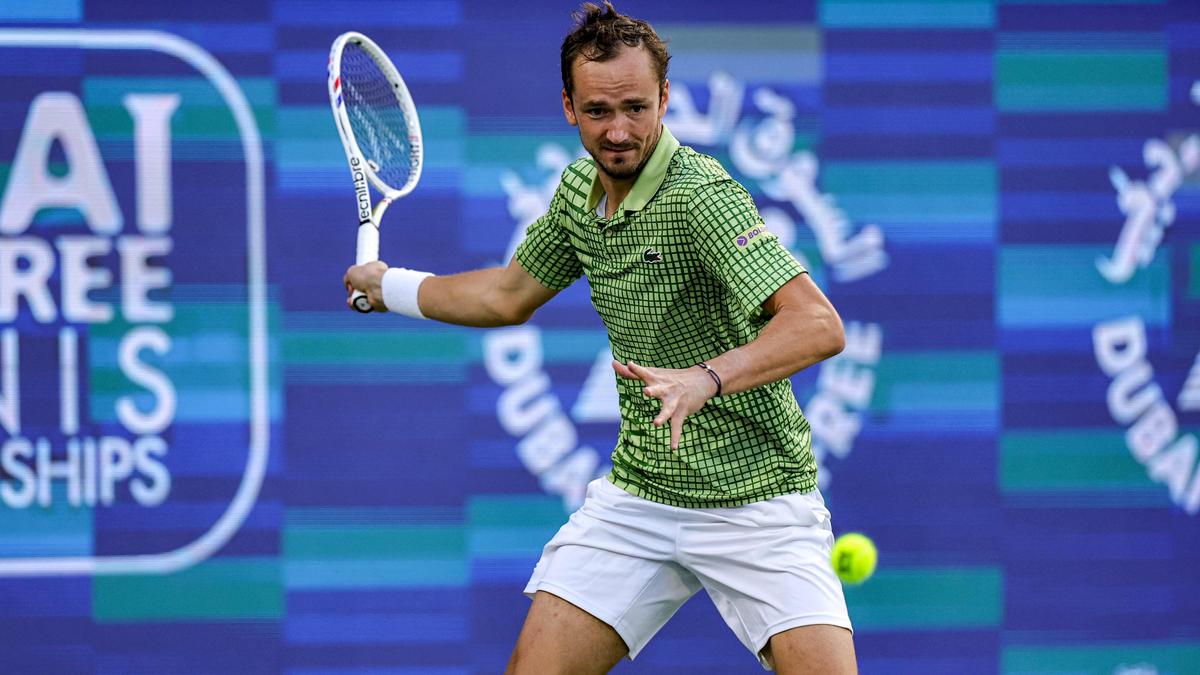
International sport often reflects the realities of the global political climate, and tennis has once again found itself impacted by events beyond the court. Russian stars Daniil Medvedev and Andrey Rublev were forced to withdraw from the Eisenhower Cup exhibition event at Indian Wells Masters following airspace disruptions linked to escalating tensions in the Middle East. The closures of key Gulf flight corridors created travel complications that made participation logistically impossible.
The withdrawals underline how interconnected global sport is with geopolitical developments. While tennis tournaments are meticulously planned months in advance, sudden regional instability can upend even the most carefully coordinated schedules.
The Eisenhower Cup: A Prestigious Exhibition Event
The Eisenhower Cup, commonly referred to as the “Tie Break Tens” event at Indian Wells, is a high-profile mixed doubles exhibition staged ahead of the main ATP and WTA draws. It typically features top-ranked men’s and women’s players competing in short-format matches that showcase skill, entertainment, and crowd engagement.
Held annually in the California desert, the event serves both as a curtain-raiser and as a promotional spectacle that attracts global attention. For players, it offers competitive match practice under tournament conditions without affecting ranking points.
Medvedev and Rublev’s scheduled participation had generated excitement among fans. Both are established figures in the top tier of men’s tennis, and their presence was expected to elevate the exhibition’s competitive appeal.
Geopolitical Tensions and Airspace Closures
The immediate cause of their withdrawal was the closure of critical Gulf airspace routes due to heightened geopolitical tensions in the Middle East. When conflict escalates in that region, commercial flight paths are often rerouted or suspended for safety reasons.
Airlines operating between Europe, Asia, and North America rely heavily on established corridors that pass through Middle Eastern airspace. Disruptions can lead to cancellations, extended travel times, or a lack of available connections — particularly on short notice.
For professional athletes operating within tightly scheduled tournament calendars, such travel uncertainty can make participation unfeasible. In this case, the inability to secure timely and safe travel arrangements prevented both players from reaching California in time for the exhibition.
Impact on Medvedev and Rublev
Daniil Medvedev, a former US Open champion and one of the most consistent performers on hard courts in recent seasons, has been a prominent figure at Indian Wells in recent years. Known for his tactical intelligence and counterpunching style, he often draws significant fan interest.
Andrey Rublev, equally established within the ATP’s top ranks, is renowned for his aggressive baseline play and powerful forehand. His participation in exhibition formats has historically added flair and intensity to promotional events.
Missing the Eisenhower Cup does not affect their participation in the main draw of the Indian Wells Masters, assuming travel arrangements for the primary tournament remain manageable. However, their absence from the exhibition highlights how fragile logistical planning can become during international crises.
Tennis and the Ripple Effects of Global Conflict
Sport has repeatedly been affected by geopolitical tensions. From visa restrictions and travel bans to tournament relocations and airspace closures, international competitions operate within a broader global ecosystem.
Tennis, in particular, demands extensive travel across continents. Players often compete in consecutive tournaments in different countries within weeks. A sudden airspace shutdown in a strategically located region like the Gulf can disrupt multiple tours simultaneously.
Unlike team sports with centralized leagues, tennis professionals manage independent schedules, travel teams, and sponsorship obligations. When disruptions occur, players must quickly reassess travel logistics, often at significant financial and physical cost.
Organisers’ Response and Replacement Plans
Tournament organizers at Indian Wells typically respond swiftly to unexpected withdrawals by adjusting the lineup and inviting alternate players. Exhibition events like the Eisenhower Cup are designed to be flexible, allowing organizers to reshuffle pairings without affecting official tournament standings.
While losing two high-profile names is a setback from a marketing perspective, the depth of talent on both the ATP and WTA Tours ensures that the event remains competitive and engaging.
Organizers must also coordinate with broadcast partners, sponsors, and ticket holders, reinforcing the importance of contingency planning in international sport management.
Broader Implications for the Tennis Calendar
The disruption arrives at a critical juncture in the tennis calendar. Indian Wells marks the beginning of the prestigious “Sunshine Double,” followed by the Miami Open. These tournaments are among the most significant events outside the Grand Slams.
Any travel complications affecting Indian Wells could potentially influence participation in subsequent events. Players depend on structured preparation, acclimatization to time zones, and practice sessions ahead of major tournaments.
If geopolitical tensions persist, airlines and governing bodies may need to issue ongoing advisories, potentially impacting additional competitions in North America and Europe.
Athlete Safety and Scheduling Realities
Player safety remains the top priority in such situations. International governing bodies and tournament organizers closely monitor government travel advisories and airline operations before confirming player arrivals.
For Medvedev and Rublev, prioritizing secure travel routes was a practical necessity. The decision to withdraw from an exhibition event — even one as prestigious as the Eisenhower Cup — reflects professional prudence rather than competitive hesitation.
Modern professional tennis is not only about physical endurance but also about logistical adaptability. Athletes and their teams must navigate global uncertainties while maintaining peak performance.
The Intersection of Sport and Global Stability
This episode once again illustrates how sport does not operate in isolation. Global politics, security considerations, and transportation networks all influence athletic events.
Airspace closures in the Gulf region serve as a reminder of how interconnected travel systems are. A localized geopolitical issue can ripple outward, affecting tournaments thousands of miles away.
For fans, the absence of star players may be disappointing. Yet it also underscores the broader context in which international competition unfolds — one shaped by both athletic excellence and global realities.
Looking Ahead
Despite missing the Eisenhower Cup, Medvedev and Rublev are expected to refocus on the main ATP competition at Indian Wells, provided travel logistics stabilize. The Masters 1000 event remains a crucial opportunity for ranking points and early-season momentum.
Meanwhile, organizers will adapt, ensuring the exhibition maintains its entertainment value. Tennis, like all global sports, has demonstrated resilience in the face of disruptions — from pandemics to political crises.
The withdrawals of two top players from a single exhibition may seem minor in the grand scheme. Yet they highlight a larger truth: in an interconnected world, even elite sport must adjust to forces far beyond the baseline.
totosecom.com totosecom.com totosecom.com totosecom.com totosecom.com totosecom.com totosecom.com totosecom.com totosecom.com totosecom.com totosecom.com totosecom.com totosecom.com totosecom.com totosecom.com totosecom.com totosecom.com totosecom.com totosecom.com totosecom.com totosecom.com totosecom.com totosecom.com totosecom.com totosecom.com totosecom.com totosecom.com totosecom.com totosecom.com totosecom.com totosecom.com totosecom.com totosecom.com totosecom.com totosecom.com totosecom.com totosecom.com totosecom.com totosecom.com totosecom.com totosecom.com totosecom.com totosecom.com totosecom.com totosecom.com totosecom.com totosecom.com totosecom.com totosecom.com totosecom.com totosecom.com totosecom.com totosecom.com totosecom.com totosecom.com totosecom.com totosecom.com totosecom.com totosecom.com totosecom.com totosecom.com totosecom.com totosecom.com totosecom.com totosecom.com totosecom.com totosecom.com totosecom.com totosecom.com totosecom.com totosecom.com totosecom.com totosecom.com totosecom.com totosecom.com totosecom.com totosecom.com totosecom.com totosecom.com totosecom.com totosecom.com totosecom.com totosecom.com totosecom.com totosecom.com totosecom.com totosecom.com totosecom.com totosecom.com totosecom.com totosecom.com totosecom.com totosecom.com totosecom.com totosecom.com totosecom.com totosecom.com totosecom.com totosecom.com totosecom.com totosecom.com totosecom.com totosecom.com totosecom.com totosecom.com totosecom.com totosecom.com totosecom.com totosecom.com totosecom.com totosecom.com totosecom.com totosecom.com totosecom.com totosecom.com totosecom.com totosecom.com totosecom.com totosecom.com totosecom.com totosecom.com totosecom.com totosecom.com totosecom.com totosecom.com totosecom.com totosecom.com totosecom.com totosecom.com totosecom.com totosecom.com totosecom.com totosecom.com totosecom.com totosecom.com totosecom.com totosecom.com totosecom.com totosecom.com totosecom.com totosecom.com totosecom.com totosecom.com totosecom.com totosecom.com totosecom.com totosecom.com totosecom.com totosecom.com totosecom.com totosecom.com totosecom.com totosecom.com totosecom.com totosecom.com totosecom.com totosecom.com totosecom.com totosecom.com totosecom.com totosecom.com totosecom.com totosecom.com totosecom.com totosecom.com totosecom.com totosecom.com