A Quiet but Strategic Technological Push
For years, China has been quietly advancing one of its most ambitious and strategically sensitive technology initiatives: a state-backed program to achieve independence in advanced semiconductor manufacturing. Often described as China’s version of a “Manhattan Project,” this effort seeks to challenge the West’s long-standing dominance over cutting-edge AI chip production. The initiative represents the culmination of nearly six years of focused government planning and investment, reflecting President Xi Jinping’s priority of technological self-sufficiency in critical sectors.
Semiconductors sit at the core of modern economies, powering everything from artificial intelligence systems and cloud computing to military technologies. China’s heavy reliance on foreign suppliers for advanced chips has been viewed by Beijing as a major national vulnerability, particularly amid tightening export controls imposed by Western countries.
Why AI Chips Matter to National Power
Advanced AI chips are not ordinary components. They require extremely precise manufacturing processes that only a few countries and companies in the world currently control. At the heart of this capability lies extreme ultraviolet lithography, or EUV, a technology essential for producing the smallest and most powerful chips used in artificial intelligence and high-performance computing.
For years, access to EUV equipment has effectively been restricted to a narrow group of Western manufacturers. This control has enabled export restrictions that limit China’s ability to domestically produce top-tier AI chips. Beijing’s response has been to invest heavily in replicating or replacing this technology through domestic innovation.
Inside China’s Secretive Development Effort
China’s semiconductor push has reportedly involved a tightly coordinated network of government research institutes, state-backed technology firms, and specialized engineering teams. Much of the work has been conducted under strict secrecy, with limited public disclosures.
Over time, engineers focused on developing the most challenging components of EUV systems, including high-powered light sources, ultra-precise optics, and vibration-free motion platforms. Reports indicate that Chinese researchers have successfully developed a working EUV light source prototype, a crucial technical milestone. While this prototype does not yet match the performance, reliability, or efficiency of established Western systems, it demonstrates that China is narrowing the technological gap.
This achievement signals that China is no longer merely attempting to work around restrictions but is instead pursuing direct technological substitution.
casinopeers.com | filmy-mantra.com | casinonewstime.com
bet-money.com | bluephotoidea.com
Progress, But Not Parity—Yet
Despite the significance of these advances, experts caution that China remains several years away from mass-producing advanced AI chips at the same level as global leaders. Building a functional prototype is only the first step; turning that prototype into industrial-scale equipment capable of producing chips with consistent yields is vastly more complex.
Manufacturing EUV systems requires an ecosystem of specialized materials, software, and ultra-clean production environments. Even small imperfections can render chips unusable. As a result, while China may aim to begin limited production using domestically developed tools in the coming years, full competitiveness is unlikely to be immediate.
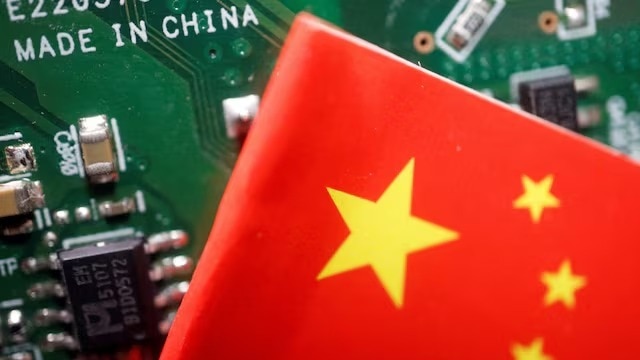
Estimates suggest that China could attempt early-stage chip production before the end of the decade, though true parity with established manufacturers may take longer.
Geopolitical Implications of the Breakthrough
The strategic implications of China’s progress extend far beyond technology. If China succeeds in developing reliable domestic alternatives to restricted equipment, the effectiveness of export controls could weaken over time. This would reshape global semiconductor supply chains and alter the balance of technological power.
For Western governments, the development underscores the limits of restrictions alone as a long-term strategy. While controls can slow progress, they may also encourage targeted investment and accelerated domestic innovation in rival nations.
For global technology companies, the shift could lead to increased fragmentation of supply chains and a more polarized technology landscape.
Challenges Still Ahead
Despite momentum, China faces major hurdles. Precision manufacturing at the scale required for advanced AI chips remains one of the most difficult industrial challenges in existence. Long-standing leaders still benefit from decades of accumulated expertise, supplier networks, and operational experience.
Moreover, advanced chip production is not just about machines. It also depends on chip design software, materials science, and close coordination between hardware and AI model development. Replicating this full ecosystem will require sustained effort and coordination.
A Turning Point in Global Tech Competition
China’s secretive semiconductor initiative highlights a broader reality: the future of artificial intelligence is inseparable from geopolitics. Control over the tools that build AI chips may prove as influential as control over the algorithms themselves.
While China has not yet dismantled the West’s AI chip advantage, it has demonstrated determination, capability, and progress. The coming decade will likely see intensified competition, faster innovation cycles, and a global race not just for smarter AI, but for the means to manufacture it.