For decades, Pakistan has acted as the geographical and political gatekeeper for Afghanistan’s trade with India. Every truckload of Afghan produce headed to India—and every shipment of Indian goods trying to reach Afghan markets—had to pass through Pakistan’s transit routes. However, repeated blockades, restrictions, and political tensions have turned this corridor into one of the most unreliable and unpredictable trade links in the region.
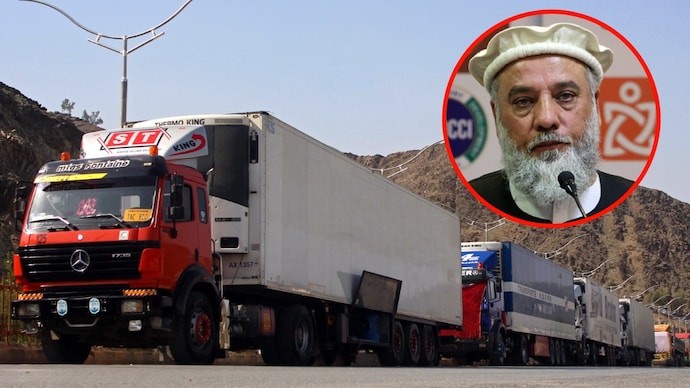
Now, in a significant geopolitical shift, Afghanistan is preparing to bypass Pakistan entirely and establish more stable air and sea trade routes with India. This new framework, centred around Iran’s Chabahar Port and fresh cargo flight connections between Indian and Afghan cities, represents a strong move by Kabul to diversify its economic partners and reduce its dependency on Islamabad.
The announcement was made during the visit of Afghanistan’s Commerce and Industry Minister Nooruddin Azizi to India. His meetings with Indian officials, business chambers, and investors highlighted a shared willingness to rebuild a trade corridor that has been fractured by instability, conflict, and political barriers.
HealthSmarty.org | OnlinePharmacyMedicine.com | ssbobetonline.com
genericviagra2015shop.com | technoguidepro.com
Pakistan’s Transit Roadblock: A Long-Standing Issue
The friction between Islamabad and Kabul is not new. Pakistan has often restricted Afghan trucks from accessing Indian markets via the Wagah border. Moreover, political tensions have led to regular shutdowns of trade routes, delays at border crossings, and arbitrary tariff changes. For Afghan traders—especially exporters of dry fruits, saffron, pomegranates, carpets, and medicinal herbs—these roadblocks have resulted in significant financial losses.
Over time, Afghanistan has grown increasingly frustrated with this dependency. According to Afghan officials, relying on Pakistan’s transit routes has made their trade “hostage to politics.” This sentiment has only strengthened since the Taliban took over in 2021 and bilateral relations with Pakistan worsened due to cross-border security concerns.
Chabahar Port: The New Gateway
India and Iran developed the Chabahar Port specifically to offer Afghanistan an alternative route that bypasses Pakistan. Strategically located on the Gulf of Oman, Chabahar allows India to ship goods into Afghanistan through the Iranian road and rail network.
Under the new plan, Afghanistan is looking to scale up its use of Chabahar significantly. This includes:
-
Boosting export shipments via Chabahar to reach Indian ports faster and at lower cost
-
Creating dedicated Afghan trade zones at the port for smoother logistics
-
Increasing Indian investments in infrastructure, processing, and warehousing
India has also reaffirmed its commitment to developing the port further, as it plays a critical role in connecting India not just with Afghanistan but also the broader Central Asian region.
New Air Corridors: Direct Cargo Flights from Delhi and Amritsar
Beyond sea routes, Kabul has announced new cargo flight corridors linking Delhi and Amritsar directly to Kabul. These air routes will:
-
Provide fast delivery for perishable Afghan exports like fruits, saffron, pine nuts, and vegetables
-
Enable Indian exporters to ship pharmaceuticals, textiles, machinery, and consumer goods efficiently
-
Reduce reliance on customs-clearance bottlenecks caused by Pakistan’s transit systems
India and Afghanistan had earlier launched air corridors in 2017, which proved highly successful. The revival and expansion of this program reflect a renewed confidence in bilateral trade cooperation.
Afghanistan’s Push for Economic Independence
Minister Nooruddin Azizi emphasized that Afghanistan wants stable trade relations insulated from political tensions. He announced several measures that Afghanistan will take to strengthen its economic partnership with India:
1. Appointing Commercial Attachés in India
Afghanistan plans to station dedicated commercial officers in major Indian cities to facilitate business partnerships, address trade challenges, and help investors explore opportunities.
2. Offering Investment Incentives
Kabul is opening multiple sectors—including mining, agriculture, energy, and infrastructure—to Indian investments, offering tax breaks and simplified approval procedures.
3. Streamlining Logistics & Customs
Afghanistan aims to modernize its customs systems and reduce bureaucratic hurdles so goods can move more smoothly through its borders, especially via Iran.
These steps signal Kabul’s determination to integrate more closely with India and reduce reliance on Pakistan-driven trade routes.
India’s Strategic Benefits
For India, deepening trade ties with Afghanistan is not just an economic decision—it’s a strategic one. A stable and economically independent Afghanistan aligns with India’s long-term interests in the region. By supporting Kabul’s efforts to diversify trade routes, New Delhi strengthens:
-
Regional connectivity through Iran
-
Access to Central Asian markets
-
Economic influence in a region where China and Pakistan have strong footprints
-
People-to-people ties through continued trade in traditional Afghan goods
India also stands to gain from Afghanistan’s vast natural resources, including lithium, copper, and rare earth minerals, which could become crucial for India’s tech and manufacturing sectors.
Why Trade Diversification Matters for Afghanistan
Today, Afghanistan faces significant economic challenges. Without international recognition of its government, formal banking restrictions and sanctions have constricted its financial system. Yet, trade remains a vital lifeline to generate revenue, sustain small businesses, and support millions of families dependent on farming and exports.
By expanding trade routes with India, Afghanistan hopes to:
-
Increase its export volume
-
Attract new investments
-
Reduce logistics costs
-
Stabilize its currency
-
Create jobs in agriculture, mining, and manufacturing
A reliable India link gives Afghan traders access to one of the largest consumer markets in the world, as well as a partner interested in long-term capacity-building.
The Road Ahead
While the new air-sea corridors represent a big nice step, challenges remain. Political uncertainty, regional tensions, conservation risks and fiscal rules should slow growth. But India and Afghanistan seem willing to make further transfers.
For Afghanistan, reducing its dependence on Pakistan is more than a commercial choice – it is a strategic pivot. By building a strong partnership with India through Chabahar and direct remittance flights, Kabul is positioning itself for greater monetary flexibility and local integration.
As India and Afghanistan begin to renew their alternative relationship frameworks, they may wish to redefine trade relations in South and Central Asia in the coming years. And for Afghanistan, this shift could also be the beginning of a larger independent, stronger and different monetary plan.
onlinepharmacymedicine.com onlinepharmacymedicine.com onlinepharmacymedicine.com onlinepharmacymedicine.com onlinepharmacymedicine.com onlinepharmacymedicine.com onlinepharmacymedicine.com onlinepharmacymedicine.com onlinepharmacymedicine.com onlinepharmacymedicine.com onlinepharmacymedicine.com onlinepharmacymedicine.com onlinepharmacymedicine.com onlinepharmacymedicine.com onlinepharmacymedicine.com onlinepharmacymedicine.com onlinepharmacymedicine.com onlinepharmacymedicine.com onlinepharmacymedicine.com onlinepharmacymedicine.com onlinepharmacymedicine.com onlinepharmacymedicine.com onlinepharmacymedicine.com onlinepharmacymedicine.com onlinepharmacymedicine.com onlinepharmacymedicine.com onlinepharmacymedicine.com onlinepharmacymedicine.com onlinepharmacymedicine.com onlinepharmacymedicine.com onlinepharmacymedicine.com onlinepharmacymedicine.com onlinepharmacymedicine.com onlinepharmacymedicine.com onlinepharmacymedicine.com onlinepharmacymedicine.com onlinepharmacymedicine.com onlinepharmacymedicine.com onlinepharmacymedicine.com onlinepharmacymedicine.com onlinepharmacymedicine.com onlinepharmacymedicine.com onlinepharmacymedicine.com onlinepharmacymedicine.com onlinepharmacymedicine.com onlinepharmacymedicine.com onlinepharmacymedicine.com onlinepharmacymedicine.com onlinepharmacymedicine.com onlinepharmacymedicine.com onlinepharmacymedicine.com onlinepharmacymedicine.com onlinepharmacymedicine.com onlinepharmacymedicine.com onlinepharmacymedicine.com onlinepharmacymedicine.com onlinepharmacymedicine.com onlinepharmacymedicine.com onlinepharmacymedicine.com onlinepharmacymedicine.com onlinepharmacymedicine.com onlinepharmacymedicine.com onlinepharmacymedicine.com onlinepharmacymedicine.com onlinepharmacymedicine.com onlinepharmacymedicine.com onlinepharmacymedicine.com onlinepharmacymedicine.com onlinepharmacymedicine.com onlinepharmacymedicine.com onlinepharmacymedicine.com onlinepharmacymedicine.com onlinepharmacymedicine.com onlinepharmacymedicine.com onlinepharmacymedicine.com onlinepharmacymedicine.com onlinepharmacymedicine.com onlinepharmacymedicine.com onlinepharmacymedicine.com onlinepharmacymedicine.com onlinepharmacymedicine.com onlinepharmacymedicine.com onlinepharmacymedicine.com onlinepharmacymedicine.com onlinepharmacymedicine.com onlinepharmacymedicine.com onlinepharmacymedicine.com onlinepharmacymedicine.com onlinepharmacymedicine.com onlinepharmacymedicine.com onlinepharmacymedicine.com onlinepharmacymedicine.com onlinepharmacymedicine.com onlinepharmacymedicine.com onlinepharmacymedicine.com onlinepharmacymedicine.com onlinepharmacymedicine.com onlinepharmacymedicine.com onlinepharmacymedicine.com onlinepharmacymedicine.com onlinepharmacymedicine.com onlinepharmacymedicine.com onlinepharmacymedicine.com onlinepharmacymedicine.com onlinepharmacymedicine.com onlinepharmacymedicine.com onlinepharmacymedicine.com onlinepharmacymedicine.com onlinepharmacymedicine.com onlinepharmacymedicine.com onlinepharmacymedicine.com onlinepharmacymedicine.com onlinepharmacymedicine.com onlinepharmacymedicine.com onlinepharmacymedicine.com onlinepharmacymedicine.com onlinepharmacymedicine.com onlinepharmacymedicine.com onlinepharmacymedicine.com onlinepharmacymedicine.com onlinepharmacymedicine.com onlinepharmacymedicine.com onlinepharmacymedicine.com onlinepharmacymedicine.com onlinepharmacymedicine.com onlinepharmacymedicine.com onlinepharmacymedicine.com onlinepharmacymedicine.com onlinepharmacymedicine.com onlinepharmacymedicine.com onlinepharmacymedicine.com onlinepharmacymedicine.com onlinepharmacymedicine.com onlinepharmacymedicine.com onlinepharmacymedicine.com onlinepharmacymedicine.com onlinepharmacymedicine.com onlinepharmacymedicine.com onlinepharmacymedicine.com onlinepharmacymedicine.com onlinepharmacymedicine.com onlinepharmacymedicine.com onlinepharmacymedicine.com onlinepharmacymedicine.com onlinepharmacymedicine.com onlinepharmacymedicine.com onlinepharmacymedicine.com onlinepharmacymedicine.com onlinepharmacymedicine.com onlinepharmacymedicine.com onlinepharmacymedicine.com onlinepharmacymedicine.com onlinepharmacymedicine.com onlinepharmacymedicine.com onlinepharmacymedicine.com onlinepharmacymedicine.com onlinepharmacymedicine.com onlinepharmacymedicine.com onlinepharmacymedicine.com onlinepharmacymedicine.com onlinepharmacymedicine.com onlinepharmacymedicine.com onlinepharmacymedicine.com onlinepharmacymedicine.com onlinepharmacymedicine.com onlinepharmacymedicine.com onlinepharmacymedicine.com