
Weight loss is often associated with intense gym workouts, high-impact cardio sessions, and restrictive diet plans. However, scientific research consistently shows that something far simpler — walking — can be an effective and sustainable tool for losing weight. While walking may appear too gentle to produce significant results, studies and health experts agree that consistent, moderate physical activity plays a powerful role in fat loss and long-term weight management.
The key question, however, remains: how much should you walk to actually lose weight?
Table of Contents
ToggleThe Science Behind Walking and Weight Loss
Weight loss fundamentally depends on creating a calorie deficit — burning more calories than you consume. Walking contributes to this deficit by increasing daily energy expenditure without placing excessive stress on the body.
Research from major health organizations, including public health authorities in the United States and Europe, suggests that adults should aim for at least 150 minutes of moderate-intensity aerobic activity per week for general health. For weight loss, many experts recommend increasing that to 250–300 minutes per week.
Walking at a moderate pace — roughly 5 to 6 kilometers per hour — qualifies as moderate-intensity activity for most people. At this pace, a person weighing around 70 kilograms can burn approximately 250–300 calories per hour. The exact number varies depending on body weight, walking speed, terrain, and fitness level.
Over time, this calorie burn accumulates significantly. Walking one hour daily, five days a week, can create a meaningful calorie deficit that supports gradual fat loss.
Is 10,000 Steps Necessary?
The idea of walking 10,000 steps per day has become widely popular. Interestingly, this number originated from a Japanese marketing campaign in the 1960s rather than from medical research. However, recent studies have examined step counts and health outcomes more closely.
Large observational studies indicate that benefits begin well below 10,000 steps. For many adults, 7,000 to 8,000 steps per day are associated with reduced risk of premature death and improved metabolic health. That said, for weight loss specifically, higher daily step counts tend to produce better results.
Experts often recommend targeting between 8,000 and 12,000 steps per day if weight loss is the primary goal. For individuals who are currently sedentary, gradually increasing step count is more sustainable than immediately aiming for 10,000 or more.
How Fast Should You Walk?
Speed matters, but not as much as consistency. A brisk pace — where you can talk but not sing comfortably — increases heart rate enough to improve cardiovascular health and maximize calorie burn.
Studies show that brisk walking can significantly improve insulin sensitivity, reduce abdominal fat, and enhance fat oxidation. Incorporating intervals, such as alternating between normal pace and faster walking for 1–2 minutes, can further increase calorie expenditure.
Walking uphill or on inclined treadmills also boosts intensity without requiring high-impact movement.
How Long Does It Take to See Results?
Weight loss from walking is gradual. Experts emphasize that sustainable weight loss typically ranges between 0.5 to 1 kilogram per week when combined with dietary changes. Walking alone, without dietary modification, may produce slower results.
However, walking offers additional benefits beyond calorie burn. It reduces stress hormones like cortisol, improves sleep quality, and supports better mood regulation. These factors indirectly support weight loss by reducing emotional eating and improving adherence to healthy habits.
Most people begin noticing changes in energy levels and endurance within 2 to 3 weeks. Visible body composition changes may take 4 to 8 weeks depending on consistency and diet.
The Role of Diet in Walking-Based Weight Loss
Walking can create a calorie deficit, but diet plays an equally important role. Research consistently shows that combining moderate physical activity with mindful eating produces better results than exercise alone.
Experts recommend focusing on:
-
Adequate protein intake to preserve muscle mass
-
High-fiber foods to increase satiety
-
Minimizing ultra-processed foods
-
Maintaining portion control
Walking helps maintain muscle and metabolic health during calorie reduction. Without physical activity, weight loss often includes muscle loss, which can slow metabolism over time.
Walking vs. High-Intensity Exercise
High-intensity workouts burn more calories per minute, but they are not always sustainable for everyone. Walking has several advantages:
-
Lower injury risk
-
Easier recovery
-
Suitable for beginners
-
Minimal equipment required
-
Can be maintained long term
For overweight individuals or those with joint concerns, walking is often recommended as the safest starting point. Consistency matters more than intensity when it comes to long-term weight control.
Research comparing moderate-intensity continuous exercise to high-intensity interval training suggests both can be effective. However, adherence rates are often higher with walking programs, making them more realistic for the general population.
Can Walking Reduce Belly Fat?
Abdominal fat is strongly linked to metabolic disorders. Studies show that regular moderate-intensity aerobic exercise, including walking, can reduce visceral fat even without dramatic weight loss.
When walking is performed consistently — at least 30 to 60 minutes most days of the week — it improves fat metabolism and reduces waist circumference over time. Adding light resistance training two to three times weekly may enhance these effects.
How to Structure a Walking Plan for Weight Loss
Experts often recommend the following progression:
Beginner Level
-
20–30 minutes per day
-
5 days per week
-
Comfortable pace
Intermediate Level
-
45 minutes per day
-
5–6 days per week
-
Brisk pace
Advanced Weight Loss Goal
-
60 minutes per day
-
6 days per week
-
Incorporate intervals or inclines
Breaking sessions into shorter segments also works. For example, three 20-minute walks spread throughout the day provide similar metabolic benefits as one continuous hour.
Non-Exercise Activity Matters Too
Beyond planned walks, daily movement contributes significantly to calorie burn. This includes climbing stairs, standing more often, doing household chores, and short walking breaks during work.
Research on non-exercise activity thermogenesis shows that small increases in daily movement can meaningfully influence long-term weight management.
For people working desk jobs, setting reminders to walk for five minutes every hour can increase total daily steps significantly.
Mental and Hormonal Benefits
Walking supports mental health, which plays a crucial role in sustainable weight loss. Regular walking reduces symptoms of anxiety and mild depression, both of which can interfere with consistent exercise and healthy eating.
It also improves sleep quality. Poor sleep is associated with higher hunger hormones such as ghrelin and lower satiety hormones like leptin. By improving sleep patterns, walking indirectly supports appetite regulation.
Who Should Be Cautious?
While walking is safe for most people, individuals with chronic medical conditions, joint injuries, or cardiovascular concerns should consult a healthcare professional before starting a new exercise routine.
Gradual progression is essential. Sudden increases in distance or speed can lead to shin splints or foot discomfort.
The Bottom Line
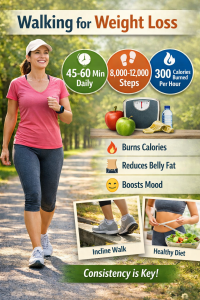
Walking is not just a gentle activity for relaxation; it is a scientifically supported strategy for weight loss and metabolic health. Most experts agree that aiming for 45 to 60 minutes of brisk walking on most days of the week, or roughly 8,000 to 12,000 steps daily, can contribute significantly to fat loss when combined with balanced nutrition.
Unlike intense workout programs that may be difficult to sustain, walking is accessible, low-risk, and adaptable to nearly every lifestyle. The secret lies not in extreme effort but in steady consistency.
For those seeking a practical, research-backed approach to weight loss, walking may be one of the most underrated yet powerful tools available.
modastor.com modastor.com modastor.com modastor.com modastor.com modastor.com modastor.com modastor.com modastor.com modastor.com modastor.com modastor.com modastor.com modastor.com modastor.com modastor.com modastor.com modastor.com modastor.com modastor.com modastor.com modastor.com modastor.com modastor.com modastor.com modastor.com modastor.com modastor.com modastor.com modastor.com modastor.com modastor.com modastor.com modastor.com modastor.com modastor.com modastor.com modastor.com modastor.com modastor.com modastor.com modastor.com modastor.com modastor.com modastor.com modastor.com modastor.com modastor.com modastor.com modastor.com modastor.com modastor.com modastor.com modastor.com modastor.com modastor.com modastor.com modastor.com modastor.com modastor.com modastor.com modastor.com modastor.com modastor.com modastor.com modastor.com modastor.com modastor.com modastor.com modastor.com modastor.com modastor.com modastor.com modastor.com modastor.com modastor.com modastor.com modastor.com modastor.com modastor.com modastor.com modastor.com modastor.com modastor.com modastor.com modastor.com modastor.com modastor.com modastor.com modastor.com modastor.com modastor.com modastor.com modastor.com modastor.com modastor.com modastor.com modastor.com modastor.com modastor.com modastor.com modastor.com modastor.com modastor.com modastor.com modastor.com modastor.com modastor.com modastor.com modastor.com modastor.com modastor.com modastor.com modastor.com modastor.com modastor.com modastor.com modastor.com modastor.com modastor.com modastor.com modastor.com modastor.com modastor.com modastor.com modastor.com modastor.com modastor.com modastor.com modastor.com modastor.com modastor.com modastor.com modastor.com modastor.com modastor.com modastor.com modastor.com modastor.com modastor.com modastor.com modastor.com modastor.com modastor.com modastor.com modastor.com modastor.com modastor.com modastor.com modastor.com modastor.com modastor.com modastor.com modastor.com modastor.com modastor.com modastor.com modastor.com modastor.com modastor.com modastor.com modastor.com modastor.com modastor.com modastor.com modastor.com modastor.com
